Pneumatically operated diaphragm pumps, also known as double diaphragm pumps , are among the most widely used equipment for pumping liquids in various industries. Thanks to their simple design, high safety standards, suitability for use in potentially explosive atmospheres, and efficiency in pumping a wide variety of corrosive, abrasive, viscous, and solid liquids, they are widely used in industries such as chemicals, oil and gas, coatings and resins, water and wastewater treatment, mining, food processing, and pharmaceuticals.
Despite their many advantages, pneumatic diaphragm pumps, like other positive displacement pumps, are very sensitive to excessive pressure changes. If the outlet becomes blocked or the inlet pressure is incorrectly set, the fluid pressure can exceed permissible limits and damage the diaphragm, valves, and piping. In such cases, the use of a pressure relief valve is an important preventative measure. This article examines in detail the function, necessity, and application of pressure relief valves in pneumatic diaphragm pumps.
What is an air-operated diaphragm pump? How does it work?
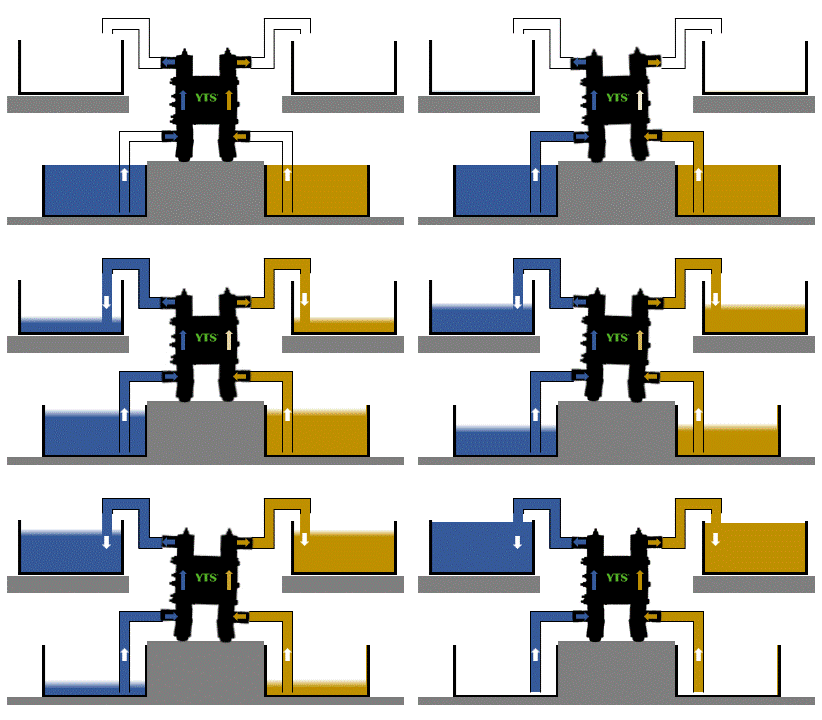
A pneumatic diaphragm pump consists of two flexible diaphragms that are alternately moved by compressed air. The compressed air is directed behind the diaphragms and draws or pushes out fluid. Check valves at the pump inlet and outlet regulate the flow direction .
Key features of air-operated diaphragm pumps include:
- High safety measures in potentially explosive atmospheres
- It can work without causing serious damage.
- The ability to commit suicide
- Ability to transport sensitive and corrosive liquids.
- It requires no electricity to operate.
Because of these properties, these pumps are very popular in precision instruments and industrial applications.
The importance of pressure control in air-operated diaphragm pumps
Pneumatic diaphragm pumps are also positive displacement pumps, which means that a certain volume of fluid is pumped out per cycle and the resulting flow rate is a direct function of the inlet air pressure and the system resistance.
If the output path is blocked or the system resistance increases:
- The fluid pressure rose rapidly.
- The membrane is subjected to high pressure.
- The risk of a leak or a rupture of the membrane increases.
Therefore, pressure regulation in these pumps is of utmost importance.
What is a safety valve?
A pressure relief valve is a mechanical component that protects a system from overpressure. As soon as the pressure exceeds a preset value, the valve opens automatically and diverts the excess fluid to a safer channel.
Pneumatically operated diaphragm pumps typically have safety valves installed in the supply line, which fulfill an important protective function.
The necessity of a pressure relief valve in a pneumatic diaphragm pump
In systems with diaphragm pumps, a sudden pressure increase can be caused by various factors, including:
- Solid particles or deposits can clog water pipes.
- The exhaust valve closed unexpectedly.
- Overregulation of the inlet pressure
- A subsequent device failure was detected.
In such cases, the absence of a pressure relief valve can lead to serious damage to the pump and system. A pressure relief valve acts as an independent safety barrier and prevents this type of damage .
The role of the pressure relief valve in protecting the diaphragm
The diaphragm is the most important and sensitive component of a diaphragm pump. Excessive pressure can have the following consequences:
- Diaphragmatic hernia
- Reduction of the service life
- Liquid leaks and safety risks
By reducing the pressure, the pressure relief valve directly protects the diaphragm and lowers maintenance costs.
Types of pressure relief valves used in air-operated diaphragm pumps
These systems typically use mechanical pressure relief valves , the type of which varies depending on the application.
1. Spring-loaded safety valve
The most common type of pressure relief valve is a valve whose opening pressure is controlled by a spring.
Advantages:
- Easy to use and extremely reliable.
- Reasonable price
- Maintenance-friendly
2. Bypass the safety valve.
In this type of system, excess liquid is returned to a storage tank or suction line, making it ideal for closed systems.
3. The pump has a built-in safety valve.
Some manufacturers incorporate a pressure relief valve into the pump, which simplifies installation but limits the adjustment options.

Position of the safety valve in a system with a diaphragm pump.
The correct positioning of the safety valve during installation plays a crucial role in its function.
- The installation location should be chosen as close as possible to the outlet of the water pump.
- Using a short pipe does not result in a significant pressure drop.
- Route the outlet of the pressure relief valve into a safe and controlled path.
A faulty installation can lead to delayed valve function.

Adjusting the safety valve
The pressure relief valve must be adjusted according to the pump and system specifications:
- Adjust the pressure so that it is below the maximum rated pressure of the pump.
- Depending on the suction pressure
- Consider the type of working medium and the operating temperature.
An incorrect setting can cause the valve to remain open or fail .
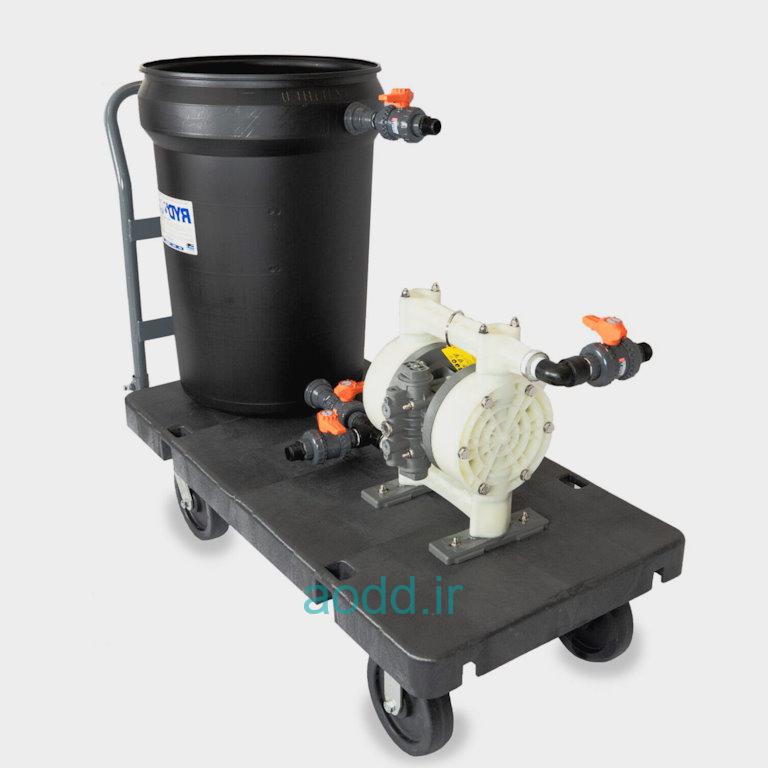
The pressure relief valve is connected to the inlet pressure regulator.
In pneumatic diaphragm pumps, the inlet pressure regulator plays a crucial role in pressure control. However, a regulator alone is not sufficient; a pressure relief valve serves as a safety system and protects the system in case of operator error or regulator failure.
Advantages of using pressure relief valves in air-operated diaphragm pumps
Using a safety valve offers a number of advantages, including:
- Improving system security
- Protective membrane and internal components
- Extending pump lifespan
- Reduction of unnecessary downtime in the production line.
- Reduced maintenance costs
PlusAir Standard Pump – Product Catalog – 2022
Maintenance and inspection of safety valves
Regular inspection and maintenance are necessary to ensure the proper functioning of the safety valve.
- Check the print settings.
- Leakage control option
- To prevent contamination of the liquid, a cleaning process is carried out.
- Replace worn parts immediately.
Common mistakes when using safety valves.
Common mistakes include the following:
- The system did not use a pressure relief valve .
- Selection of valves with insufficient flow capacity
- Set the pressure to a value that is above the permissible limit set by the pump.
- Fluid flow in an uncertain direction
Avoiding these errors is crucial for improving system security and efficiency.
In conclusion
Since pneumatic diaphragm pumps operate on the displacement principle using compressed air, they are very sensitive to pressure fluctuations. As a crucial safety component, the pressure relief valve plays a vital role in protecting the diaphragm, the pump housing, and the entire system. Therefore, selecting the appropriate pressure relief valve, proper installation, precise adjustment, and regular maintenance are essential for the safe and reliable operation of pneumatic diaphragm pumps in industrial environments.