Pneumatic diaphragm pumps are among the most widely used pump types in industries such as chemicals, food processing, oil and gas, and refining due to their simple design, high safety standards, and ability to handle a variety of corrosive, viscous, and solid liquids. Flange connections are essential for the efficient and leak-free operation of these pumps and play a key role in connecting them to pipelines.
This article provides a comprehensive overview of flange connections for pneumatic diaphragm pumps , from their design and criteria to their advantages, installation methods and maintenance.
Definition and structure of the labial connection
A flanged connection is a mechanical connection that joins two components of a pipeline or pumping system. Flanges are mounted in pairs (with external and internal threads) at opposite ends of a pipe or device. Bolts, nuts, and gaskets ensure a tight, watertight connection.
Pneumatically operated diaphragm pumps typically use flanges at the inlet (suction port) and outlet (pressure port) to easily connect and disconnect the pump from the process piping.
The construction of the cuff connection includes the following parts:
-
Flange body : a round plate with evenly spaced holes for attaching the screws.
-
Screws and nuts : are used to connect and fasten two flanges.
-
Seals or sealing rings : are used to prevent leaks between contacting surfaces.
-
Contact area : The part of the edge that comes into contact with the seal and its type (RF, FF, RTJ) are selected according to the pressure and type of fluid.
Types of lips used in diaphragm pumps
Flanges can be classified into several main categories based on their design, material, and manufacturing standards . The most common flange types for diaphragm pumps are:
1. Welded neck
This flange is suitable for high-pressure pumps and industrial applications under harsh conditions. The flange neck design reduces stress peaks and improves connection strength.
2. Sliding lip
This type of flange is first placed onto the pipe and then welded. Thanks to its simple assembly and low cost, it is ideally suited for medium-pressure systems.
3. Thread projection
Threaded flanges are a good choice for systems that require frequent shutdowns and operate at relatively low pressure. These flanges are typically used on small diaphragm pumps.
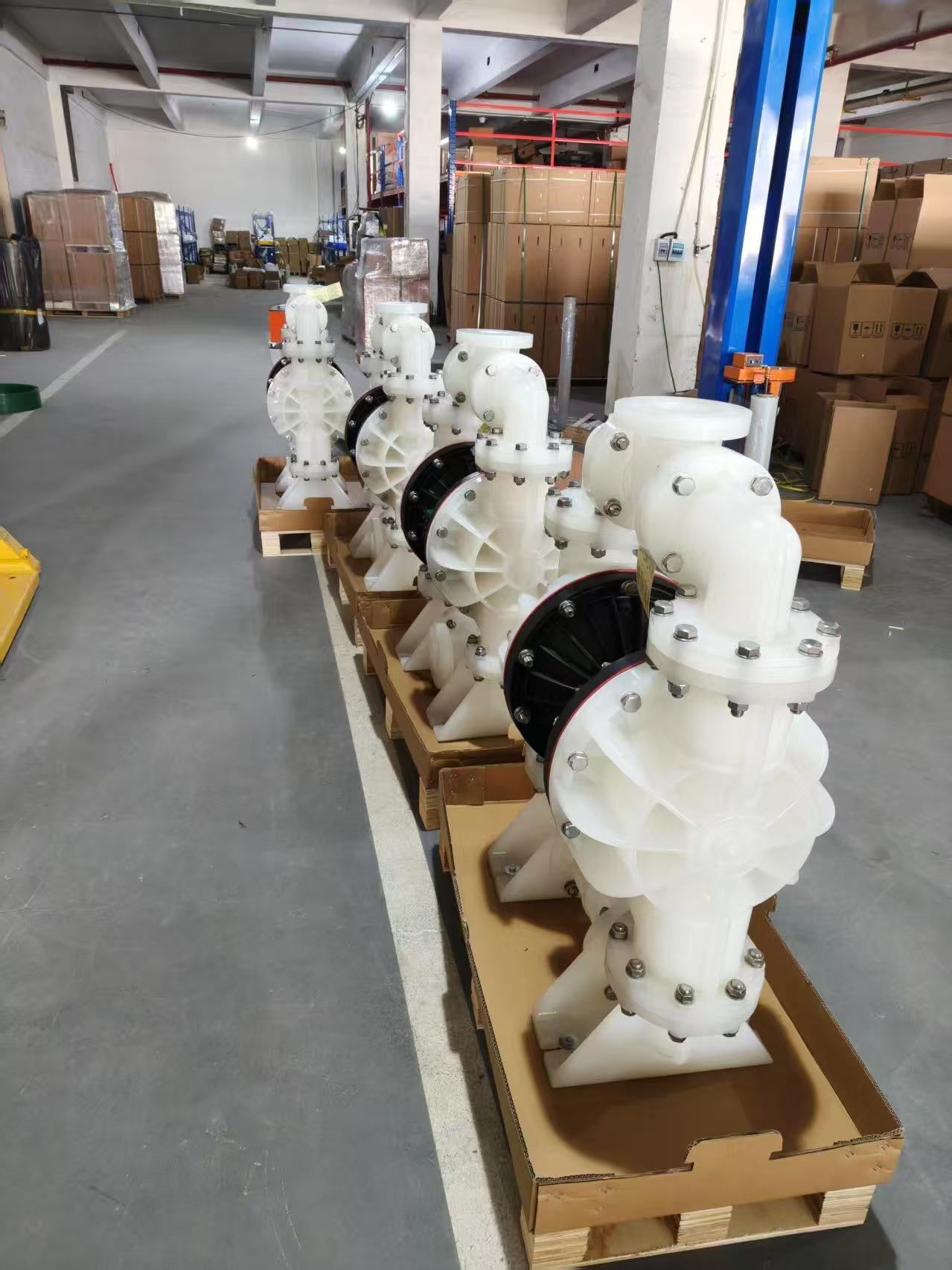
4. Cable ties made of polypropylene or polyvinylidene fluoride
In the chemical and food industries, where high corrosion resistance is required, plastic or polymer flanges are frequently used . These flanges are fully compatible with pumps made of polypropylene, polyvinyl chloride (PVDF), or polytetrafluoroethylene (PTFE).
Standards used in lip design
Flange connections must be designed and manufactured according to international standards to ensure interchangeability and performance. Key standards include :
-
Steel edges conforming to ANSI/ASME B16.5 standards with a maximum compressive strength of 2500 psi.
-
European flange DIN EN 1092-1
-
Japanese standard flange JIS B2220
-
International Standard ISO 7005
The selection of the appropriate standard should be based on the pump type, the type of fluid, and the piping system.
Advantages of flange connections in diaphragm pumps
-
Easy assembly and disassembly: The flange allows maintenance or replacement work without damaging pipes or pumps.
-
Leak-proof, airtight connection: A complete seal is achieved with the appropriate gasket.
-
High pressure and temperature resistance: The edges are more stable than threaded or plug connections.
-
Precise alignment capability: In precision systems, the edges enable precise pump positioning.
-
High strength and mechanical resistance: especially in metal versions such as stainless steel 304 or 316.
Materials used in the production of lips
The sealing material must be compatible with the pump housing material and the type of medium. Common materials include:
-
Stainless steel (304/316 stainless steel): corrosion-resistant, suitable for the food and pharmaceutical industries.
-
Cast iron: Suitable for general and medium pressure applications.
-
Aluminum: Lightweight and oxidation-resistant, typically used in low-power pumps.
-
Polypropylene (PP) or polyvinylidene fluoride (PVDF): resistant to aggressive chemicals.
-
Polytetrafluoroethylene (Teflon): possesses excellent resistance to acids and alkalis and is suitable for some chemical industries.
Choose the correct seal.
Gaskets or sealing washers are essential to prevent leaks in flange connections. Incorrect selection can lead to system failures.
Gasket type:
-
Asbestos-free: suitable for general liquids.
-
Polytetrafluoroethylene (PTFE): Suitable for use with chemicals and corrosive substances.
-
Rubber/EPDM/fluororubber: Pumps used in the food and pharmaceutical industries.
-
Graphite fillers: suitable for high-pressure and high-temperature environments.
Important points to consider when mounting flanges on diaphragm pumps
-
Precise edge alignment: Any deviation can lead to leaks or cracks in the joint.
-
When tightening the screws, care must be taken to ensure that they are tightened with the correct torque: tighten evenly and crosswise.
-
Check the condition of the connections before installation: cracks or contamination can lead to leaks.
-
PTFE seals must not be treated with grease or lubricants , as this impairs the sealing performance.
-
Check screws and edges regularly, especially during strong vibrations.
Application of flange connections in various industries
Flange fittings in diaphragm pumps are widely used in the following areas:
-
Oil, gas and petrochemical industry
-
Water and wastewater treatment plants
-
Food and beverage industry (used for transporting syrups, yogurt, oils, etc.)
-
Pharmaceutical and medical industry
-
Pipelines for the transport of acids, solvents and hazardous chemicals
-
Factories that manufacture paints, resins and adhesives
In all these cases, the tabs play a crucial role in ensuring a secure connection and reducing production downtime.
Tips for maintenance and regular inspections
-
Regularly check the tightening torque of the screws, especially after the first few hours of operation.
-
To prevent rust on steel edges: Use suitable coatings or stainless steel edges.
-
The seal must be replaced every time the rim is opened, even if it appears undamaged.
-
To check for leaks, use soapy water or compressed air to ensure a complete seal.
In conclusion
In pneumatic diaphragm pumps, flange connections serve more than just a mechanical function: they are essential for the safe and leak-free operation of the system. The correct selection of flange type, material, and gasket, as well as adherence to installation guidelines, ensures a long pump service life and prevents unplanned production downtime.
The use of standardized, robust flanges and their correct installation significantly reduces maintenance costs and improves overall system efficiency. Therefore, flanged connections should be considered an integral part of the system, not merely an optional addition, when purchasing or installing an air diaphragm pump