Pneumatic diaphragm pumps (PMPs) are widely used in the chemical, petroleum, pharmaceutical, and food industries due to their excellent pumping capacity for hazardous, corrosive, and flammable liquids, even those containing solid particles. Powered by compressed air, these pumps are the ideal choice for many industries thanks to their simple and safe design.
Ensuring safety in potentially explosive atmospheres is one of the most important considerations when using this equipment . In such situations, only equipment that complies with explosion protection standards is permitted. In Europe and many countries worldwide, the ATEX Directive 2014/34/EU is the relevant document for the safety of equipment in potentially explosive atmospheres.
What is the ATEX standard?
The term ATEX is derived from “explosive atmospheres”. This directive, developed by the European Union, applies to equipment and protective systems intended for use in potentially explosive atmospheres.
The ATEX Directive 2014/34/EU replaced the previous version 94/9/EC and entered into force on 20 April 2016. The standards stipulate that equipment must be designed, manufactured and tested in such a way that it does not produce sparks, flames or temperatures that could cause an explosion, either under normal or abnormal operating conditions.
Why is ATEX certification important for air-operated diaphragm pumps?
Diaphragm pumps are frequently used to pump substances such as solvents, paints, fuels or flammable chemicals, where even the smallest spark or temperature increase can cause an explosion.
Implementing the ATEX directive in the design and manufacture of diaphragm pumps offers the following advantages:
-
Provides greater safety for employees in high-risk environments.
-
Protection of industrial plants from explosions.
-
Complies with EU legislation for export and use in the member states.
-
Strengthen customer confidence in the quality and safety of the devices .
ATEX hazard area classifications
An important part of the manual is the classification of potentially explosive atmospheres into zones .
-
Zone 0: Environments with continuous or prolonged exposure to explosive gases.
-
Zone 1 : An environment where an explosive atmosphere may form during normal operation.
-
Zone 2 : An environment where explosive gases are rarely produced or only occur for short periods of time.
Explosive propellants are classified similarly (zones 20, 21 and 22).
ATEX-certified, air-operated diaphragm pumps are classified according to the zones indicated on the nameplate.
ATEX marking on the pump
Products manufactured according to ATEX standards have special markings. For example:
II 2G Ex h IIB T4 Gb
The code contains the following information:
-
II : Equipment group (II stands for agricultural industry , I for mining industry).
-
2G : Device classification (Group 2 corresponds to Zone 1, G corresponds to gas).
-
For example : The device is explosion-proof .
-
H : Protection method (e.g. , special construction or special materials).
-
IIB : Classification according to gas type (e.g. hydrogen, methane, etc.).
-
T4 : Temperature level (maximum surface temperature of the device).
-
GB : Protection level (high or very high).
This information helps users ensure that the pump is suitable for their operating conditions.
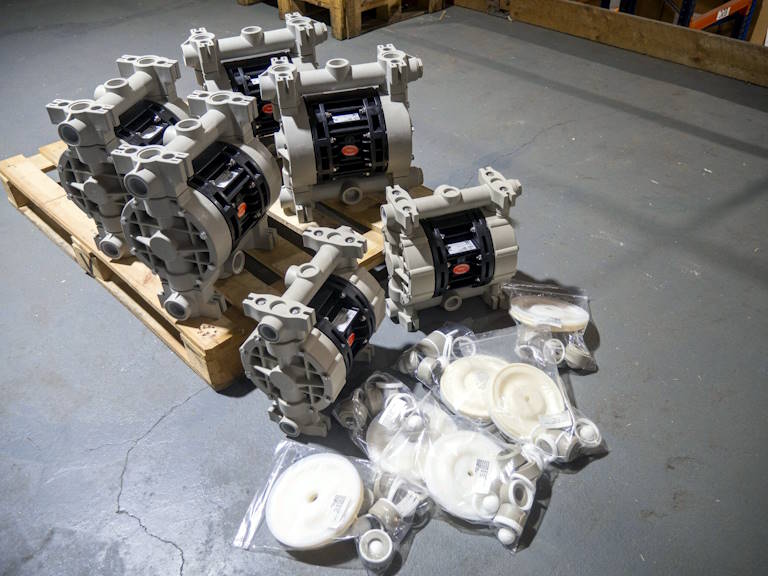
ATEX conformity procedure for diaphragm pumps
To obtain ATEX certification for a diaphragm pump, the manufacturer must perform the following steps:
-
Risk analysis and assessment of potential hazards in projects.
-
Select suitable materials and components (e.g. spark-free membranes and coatings).
-
Electrical and mechanical tests (if metal or electrical parts are present).
-
Continuous production and quality control .
-
Marking and issuing of the Declaration of Conformity (DoC) .
Advantages of ATEX air-operated diaphragm pumps in industrial applications
-
Ensuring the safe transport of flammable liquids.
-
Reduction of production downtime due to accidents.
-
Possibility of export and international use.
-
Reduce your insurance costs and follow the safety regulations.
-
The use of higher-quality materials and components extends the lifespan of the devices.
Challenges in ATEX-compliant pump production
While compliance with ATEX directives offers significant added value, it also presents manufacturers with challenges:
-
Additional investments in design and raw materials are required .
-
The selection of components is limited by the requirements for spark protection.
-
Testing and verification at reputable European institutions is expensive.
-
It is necessary to train staff in the areas of production, testing, customer service, etc.
ATEX and the future of diaphragm pumps
Given the growing global awareness of safety, ATEX requirements are expected to become more stringent in the coming years. Furthermore, integration with other standards, such as IECEx (a global system similar to ATEX), will ensure that explosion-proof equipment complies with international standards.
For consumers, this means easy access to safer and more user-friendly pumps in all countries.
Finally
Diaphragm pumps are widely used in industry due to their high efficiency in transporting hazardous and sensitive liquids. However, their safe use in potentially explosive atmospheres is only possible if they have been designed and manufactured in accordance with the ATEX Directive 2014/34/EU.
This directive not only ensures the safety of personnel and equipment, but also supports manufacturers in entering global markets and building customer trust. Therefore, choosing ATEX-certified diaphragm pumps is a strategic and economic necessity for the oil and gas, chemical, and pharmaceutical industries.