Pneumatically operated double diaphragm pumps (ADPs) are widely used in various industries, including petrochemicals, pharmaceuticals, food processing, and water treatment. Piston stroke testing is one of the most important testing methods for verifying the condition and efficiency of these pumps . It provides valuable information about the pump’s operating condition, air pressure settings, diaphragm performance, and the condition of the inlet and outlet valves.
In this article, we will examine in detail the testing of the impact velocity of air-operated diaphragm pumps, its significance, the testing methods, and the analysis of the results.
What is a tactile test?
The test measures the number of back-and-forth movements of the pump diaphragm per unit of time . Each lateral movement of the diaphragm corresponds to one revolution or stroke. The number of strokes correlates directly with the overall performance of the pump. This test is typically performed without load (no fluid flow) or with a light load to assess the pump’s self-regulating capability.
Why is tactile testing important?
1. Check if the pump is working properly.
An unusual increase or decrease in stroke speed may be a symptom of problems such as an air leak, a blocked fluid passage, an internal valve failure, or diaphragm wear.
2. Check the suction pressure setting.
The compressed air pressure flowing into the pump directly affects its stroke rate. This test helps to determine the optimal operating pressure for the pump.
3. Check the airflow.
By measuring the impact velocity and knowing the volume of air delivered per revolution, the pump’s compressed air consumption can be precisely estimated. This is crucial for optimizing the energy efficiency of the pneumatic system.
4. Preventive maintenance
Regular monitoring of the operating frequency helps to identify problems early and prevent sudden failures.
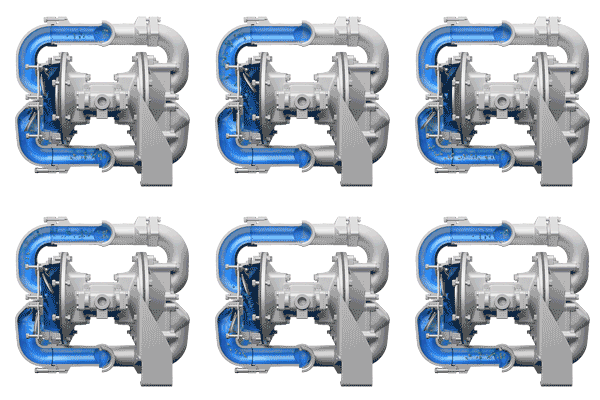
How to perform a stroke test on a diaphragm pump
Step 1: Preparing the pump
-
The pump must be safely disconnected from the system or put into test mode.
-
The pump must be emptied (if the test is performed in dry conditions).
-
Adjust the air intake pressure and make sure the system has no leaks.
Second step: Connect a compressed air source.
-
The air flows into the pump at a certain pressure (for example, 4 to 6 bar).
-
To obtain more accurate test results, it is necessary that the ambient temperature and initial conditions remain constant.
Step 3: Count the number of hits.
-
By listening to the pulsating diaphragm sound or using a sensor, the number of heartbeats can be counted over a specific period of time (e.g. 60 seconds) .
-
Some pumps have built-in piston stroke counters to simplify the process.
Step four: Record the results
-
The number of pulses, the input pressure , the ambient temperature, and any special observations should be recorded.
-
If the tests are performed regularly, the results should be compared with previous results.
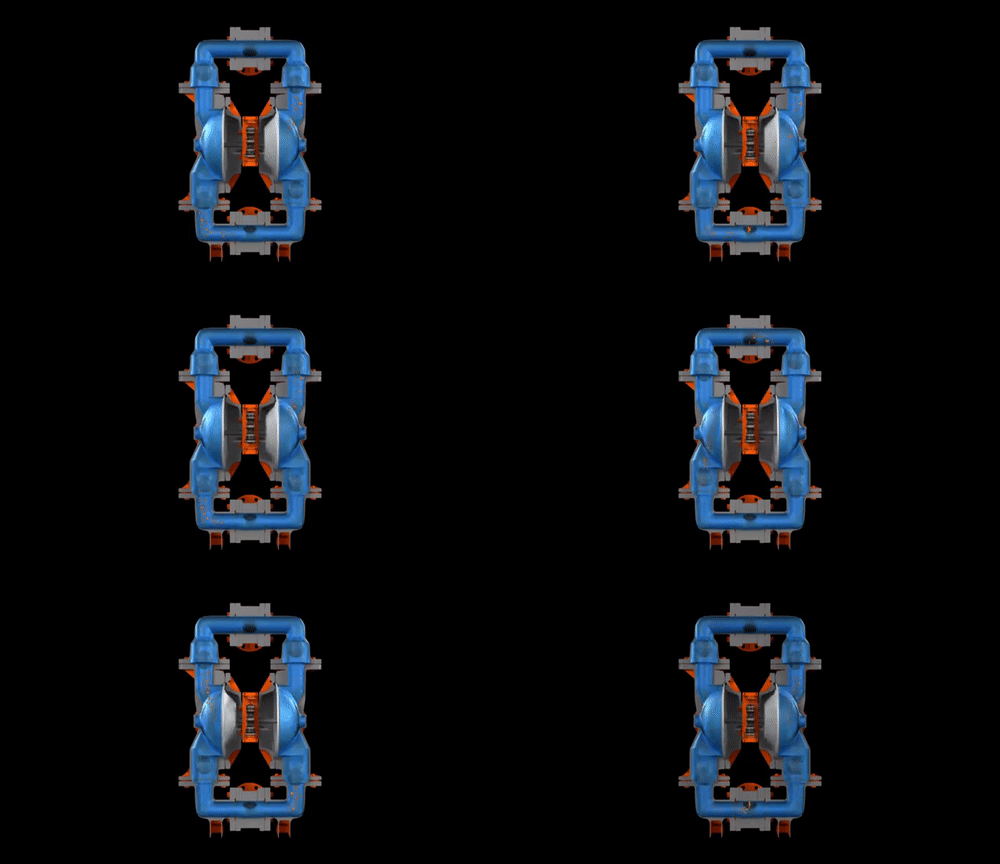
Interpretation of the results of the tactile test
To overcome
If your heart rate is significantly higher than normal, this could be a sign of one of the following conditions:
-
The air pressure is extremely high.
-
Damage to membranes and internal leaks
-
open output or low resistance
-
Air valve malfunction
very weak or irregular heartbeat
A slow or irregular heartbeat can have the following causes:
-
Insufficient air pressure
-
Blocked fluid inlet or outlet.
-
Valve malfunction
-
Worn or blocked moving parts
Constant collision velocity over time
Under controlled test conditions, a stable impact velocity indicates the proper operation of the pump and compressed air system. This is desirable.
Tips for improving test efficiency
-
To measure your heart rate , use an accurate device. A vibration or sound sensor can be helpful.
-
Conduct regular checks (e.g. monthly or after each maintenance procedure).
-
Document test results and create charts to analyze trends.
-
Always refer to the pump’s operating instructions to check the permissible operating conditions.
Application of stroke tests in predictive maintenance
Many plant operators have implemented vibration testing as part of their preventive maintenance programs. These tests have proven effective in reducing unexpected failures. For example, if the vibration frequency gradually increases over time, a membrane replacement may be necessary. This information helps improve repair planning, minimize production downtime, and reduce costs.
In conclusion
Performance tests are among the simplest and most effective methods for assessing the condition and performance of a pneumatic diaphragm pump. These tests not only help to identify potential problems early on, but also improve the energy efficiency and effectiveness of the pneumatic system.
It is recommended that operators of industrial plants and maintenance personnel carry out this test as part of their regular monitoring program for rotary diaphragm pumps.